The Dust on Your Shelves Is Trying to Tell You Something
Most of the dust on your shelves never had to land there. It rode in on air that slipped around a filter sitting a little loose in its slot. After pulling hundreds of filters that measured close to the right size but not quite, I can tell you the gap along the edge is where a home’s air quietly goes wrong and where the energy bill quietly creeps up. The size stamped on your current filter settles most of the question, and getting it right counts for more than the name on the box. Once you know the size, here is where I start the search for choosing the right 11.5x11.5x1 air filter so it seals clean with no leaks. The right filter also does its best work alongside staying ahead with routine tune-ups, which keeps air moving the way your system was built to move it.
TL;DR Quick Answers
- Read the size printed on your current filter’s frame, and that number is the nominal size you shop by.
- An 11.5x11.5x1 filter actually measures about 11.5 by 11.5 by 0.75 inches, because the label rounds up.
- A nominal 12x12x1 usually lands at that same actual size, so match what slides into the slot, not the words on the box.
- MERV 11 suits most homes, and longer-lasting pleated filtration holds up between changes, while MERV 8 covers everyday dust and MERV 13 reaches the finest particles your system can pull air through.
- Plan on a fresh filter about every ninety days, sooner with pets or allergies, and keeping spare filters ready makes that easy to stay on top of.
Top Takeaways
- Check the size printed on your current filter’s frame before you buy anything.
- The label rounds up, so an 11.5x11.5x1 really measures close to 11.5 by 11.5 by 0.75 inches.
- A nominal 12x12x1 usually shares that same actual size, so match the slot rather than the label.
- Gaps, whistling, or dust piling up fast all point to a fit problem, and keeping airflow paths clear through the rest of the home helps your system breathe.
- A pleated MERV 11 is the practical pick for most homes, and capturing everyday dust and pollen is the work that range does well.
- Stick to a steady replacement schedule, since pleated filters that trap more outlast and outwork cheap fiberglass.
Reading the Size, Spotting a Bad Fit, and Picking a Rating
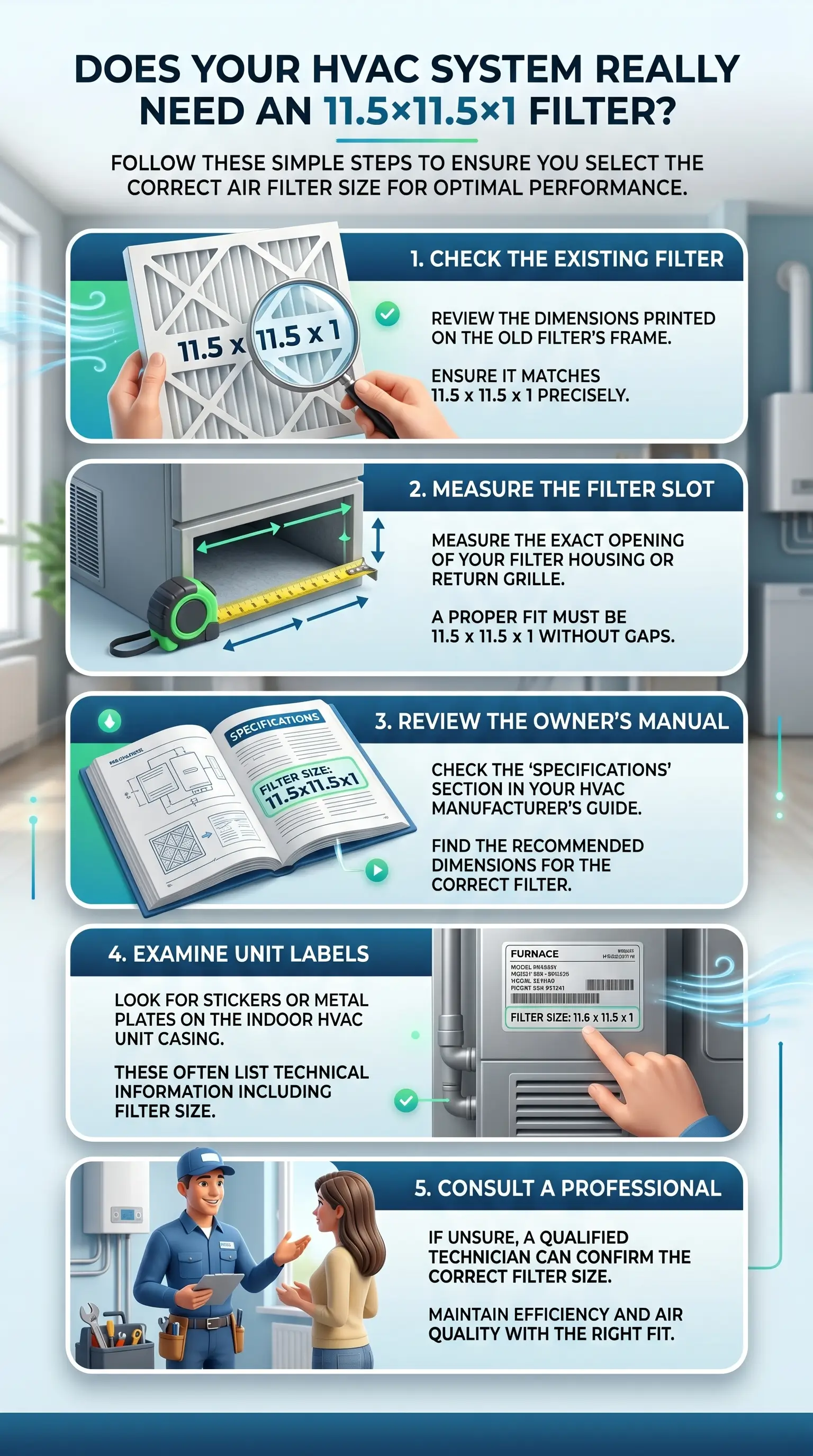
Start at the return vent or the slot beside your air handler. That is where the filter lives, and where the size hides in plain sight on the cardboard edge, usually printed as something close to 11.5x11.5x1. That printed number is the nominal size, a rounded label the industry uses to keep shelves organized. The real filter runs a touch smaller, closer to 11.5 by 11.5 by 0.75 inches, which is why two filters with different labels can feel almost identical in your hand. This one detail trips up more people than anything else I run into, so it is worth slowing down for. A nominal 12x12x1 often lands at that same actual measurement, so if a 12x12x1 has been rattling around loose in your slot, an 11.5x11.5x1 may be the size your system was built to hold.
An air filter does plain, useful work, trapping the dust, pollen, and particles you never see before they reach your blower and coil. Get the size wrong and that job falls apart in ways you can hear and see. A filter that runs too small leaves gaps, unfiltered air slips right past them, and grime settles on your coil instead of in the media. Force one into a slot that is too tight and it bows or buckles, and you will often hear a whistle or a rattle when the system kicks on. A filter that turns gray within a couple of weeks, or a house that needs dusting far more often than it used to, both send you back to the fit before anything else. The rest of the airflow path matters too, which is why sealing leaky ductwork keeps conditioned air from escaping before it ever reaches you.
Once the size checks out, the rating is your next call, and it comes down to a trade between capture and airflow. A MERV 8 filter handles everyday dust and lint while letting air move freely. A MERV 11 reaches finer stuff like pet dander and smaller pollens, which is what most homes with pets or allergies want. A MERV 13 catches the finest particles a typical home system can still pull air through. Higher does not automatically mean better, because a rating your blower cannot push air through will choke the whole system. On a budget, affordable everyday filtration in a basic pleated rating still beats a bargain fiberglass panel. Match the rating to how your home actually lives, and swap the filter on a schedule instead of waiting for a problem to announce itself.
“In my experience, the homeowners who never think about filter size are the ones calling a few months later about weak airflow and dusty vents, and the fix is almost always matching the actual dimensions to the slot. Confirm the size first, choose a rating your system can breathe through, and the filter will do its job quietly for the full ninety days.”
Seven Trusted Resources for Sizing and Filtration Decisions
These are the sources I point people to when they want to get past the label and understand what their filter is actually doing.
- ENERGY STAR HVAC maintenance checklist, which covers what a proper seasonal service should include, filter checks among them.
- American Lung Association air cleaning guide, which explains how HVAC filtration fits into healthier indoor air.
- NIEHS overview of air pollution and health, which gives the research view on why indoor particles matter.
- CPSC guide to indoor air quality, a plain-language home reference on pollutants and ventilation.
- EWG air filter buying guide, with practical pointers on ratings and a snug, secure fit.
- Building America high-MERV filter guide, which shows how higher ratings interact with system airflow.
- ASHRAE residential filtration FAQ, which lays out engineering guidance on choosing a residential MERV.
Three Numbers Worth Keeping in Mind
- Levels of several common organic pollutants run about two to five times higher indoors than outdoors, according to the EPA guide to indoor air quality.
- Dirty, clogged filters cut airflow and system efficiency, and the grime that slips past a clogged filter can foul the coil and shorten equipment life, per the U.S. Department of Energy.
- Close to 25 million Americans, around 7.7 percent, currently live with asthma, based on the CDC national asthma data.
My Honest Take After Years of Pulling Filters
If I could hand you one rule, it would be this: size first, rating second, brand last. The fit decides whether the filter does its work at all, and a snug, correctly sized filter in a modest rating beats a premium one that leaves gaps around the edges every time. I have watched people pay extra for a high rating their blower could not move air through, then wonder why the house felt stuffy and stale. When something does go sideways, professional AC repair help beats another guess, and comparing repair quotes wisely keeps the bill honest. Confirm the dimensions, pick a rating your system can handle, and hold a steady replacement rhythm. Do those things and your filter stops being something you think about at all.
Frequently Asked Questions
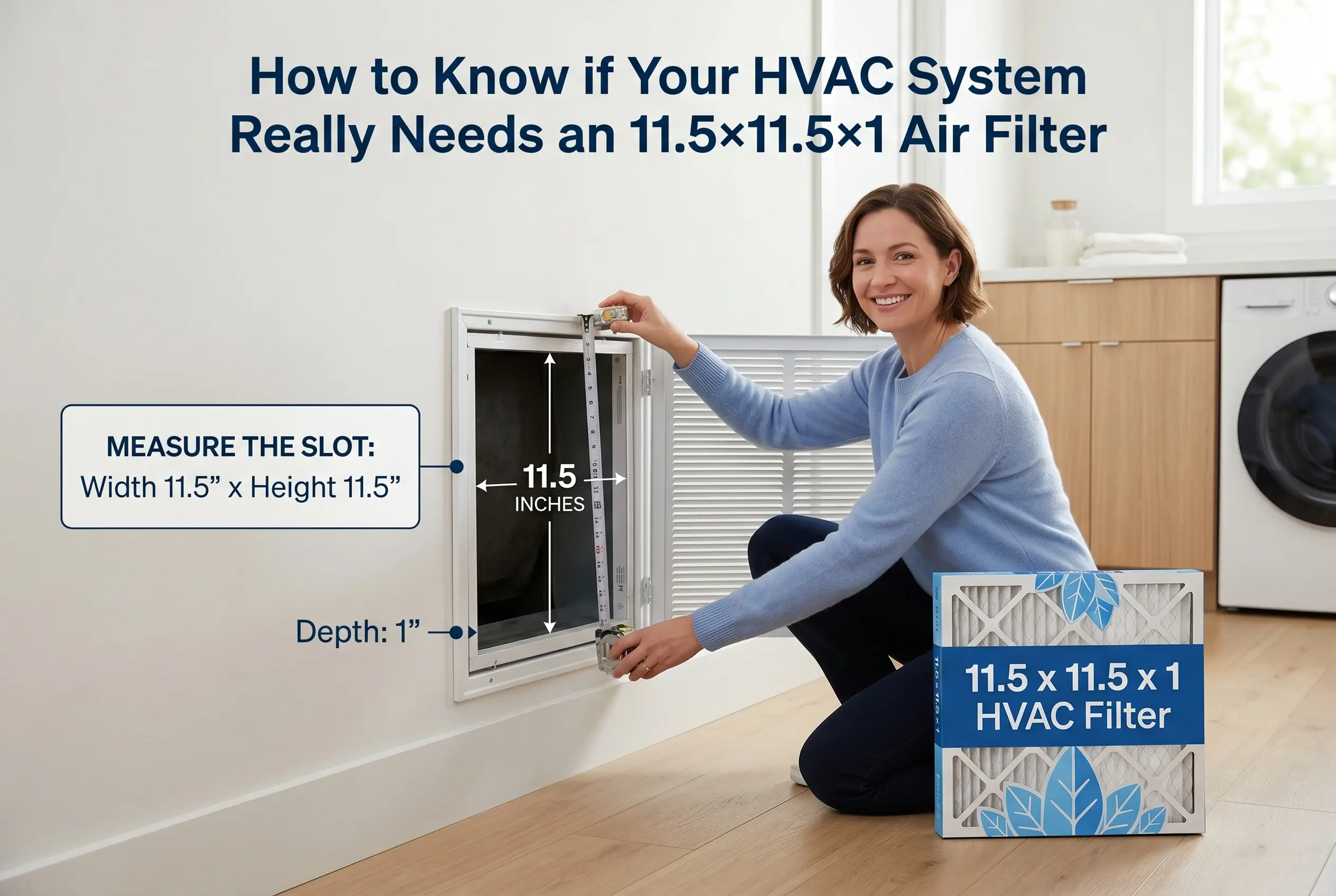
How do I know if my filter is 11.5x11.5x1? Pull your current filter and read the size printed on the cardboard frame. If the slot sits empty, measure the opening and match it against the printed sizes when you shop, or have a technician confirm it on a visit, where getting a free estimate makes an easy starting point.
Is 11.5x11.5x1 the same as 12x12x1? Often, yes. Both nominal labels tend to map to an actual size near 11.5 by 11.5 by 0.75 inches, so trust what your slot holds snugly over the words on the box.
What is the actual size of an 11.5x11.5x1 filter? Right around 11.5 by 11.5 by 0.75 inches. The nominal label rounds up for shelf sorting.
Which MERV rating should I choose for this size? Go with MERV 8 for everyday dust, MERV 11 for homes with pets or allergies, and MERV 13 for the finest particles your system can still draw air through. When dust is your main worry, stronger dust defense in a thicker pleat earns its keep.
How often should I replace a one-inch filter this size? About every ninety days as a baseline, and sooner with pets, allergies, or heavy use. Pairing those swaps with steady year-round comfort from regular upkeep keeps performance even.
What happens if I use the wrong size? Air leaks through the gaps, dust loads onto the coil, and you may hear whistling or rattling. The filter also clogs and wears unevenly, so it does less for more cost, while the right fit and fresher, odor-free air make the difference you actually want.
Get the Fit Right and Breathe Easier
Measuring your slot and confirming the size takes about two minutes, and it is the surest path to a filter that seals clean and lasts its full life. Start with the dimensions, choose the rating that suits your home, and when the system itself is past its prime, planning a system upgrade is the natural next step.
Learn more about HVAC Care from one of our HVAC solutions branches…
Filterbuy HVAC Solutions - Miami FL - Air Conditioning Service
1300 S Miami Ave Apt 4806 Miami FL 33130
(305) 306-5027
https://maps.app.goo.gl/Ci1vrL596LhvXKU79